Gorilla Sex and Reproduction: Understanding How Gorillas Have Sex, Reproduce and Grow their families
Gorillas are among the world’s most fascinating primates, yet very few people actually understand how they mate, raise their young, and sustain their populations in the wild. When exploring gorilla sex and reproduction, the story is far more about social bonds, hierarchy, and long-term care than anything people typically imagine. It’s a slow, deliberate process shaped by the forests they live in and the tight-knit family groups that define their lives.
Gorilla Sex and Reproduction Within the Family Structure
Everything about mating in gorillas begins with the structure of the group. A typical gorilla family is led by a dominant silverback, whose role is not just to protect the group but also to maintain harmony and decide when the group moves, feeds, or rests. Females choose to stay with a silverback because he offers security, and this stability influences how and when reproduction happens.
In these families, relationships matter. Females often build trust with the silverback over years, creating a social bond that shapes when they choose to mate. There is no fixed breeding season, so reproduction can happen at any time of year. What does stay consistent is the calm and predictable nature of mating itself, which reflects the peaceful temperament gorillas are known for.
How do Gorillas have Sex? | Mating Behavior, Female Cycles and the Path to Conception
Gorillas can have sex throughout the year, and reproduction usually involves the dominant silverback and the adult females in his group. A female typically initiates mating when she is fertile, although the silverback may also show interest through gentle gestures or vocal cues. If she isn’t receptive, the interaction usually ends there, since gorilla social behavior is built around maintaining group stability.
Mating generally happens on the ground with the male positioned behind the female, which is the most common posture among gorillas. Even so, researchers have occasionally recorded mountain gorillas and lowland gorillas mating face-to-face, a behavior once thought to be rare among primates.
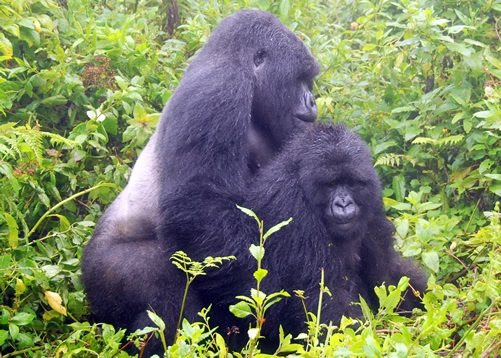
A female gorilla becomes sexually mature between eight and ten years old. Her fertility cycle is similar to other primates, though much less obvious. When she is receptive, she may approach the silverback, a behavior that helps keep mating interactions subtle and free of conflict.
A female gorilla doesn’t show obvious physical signs when she is fertile. Instead, she signals her readiness by approaching the male, pressing her lips together, and holding eye contact. If he doesn’t react, she may tap or slap the ground to get his attention. When the silverback is uninterested or occupied, she may sometimes mate with a subordinate male in the group.
Because females give birth only once every four to six years, conception does not happen often in a single lifetime. This slow rate is one reason conservation remains so important. A single infant represents a huge investment for the group, and everything about their biology reflects this careful pace.
Pregnancy, Birth, and Early Life
Gorilla gestation lasts about eight and a half months, close to the human timeline. Once the infant arrives, the mother becomes the center of its world. Newborn gorillas are tiny compared to adults, and their early weeks are spent clinging to their mothers while nursing and learning to navigate their surroundings. The silverback plays a protective role, ensuring the infant is safe and accepted by the rest of the group.
Infants gradually become more independent, exploring a little further each month. By the time they reach three to four years, they are energetic young gorillas who spend much of their time playing, climbing, and learning social cues from older group members.
Growth, Adolescence, and the Start of the Next Generation
As juveniles mature, the reproductive cycle begins again. Males enter a long adolescent phase, eventually becoming blackbacks before reaching full silverback status around twelve to fifteen years old. Females typically leave their birth group to join a new family, which helps prevent inbreeding and keeps genetic diversity strong.
This slow, steady rhythm of growth and dispersal is what maintains healthy gorilla populations. Every stage is shaped by the forest environment, the leadership of the silverback, and the deep social connections within the group.
Why Understanding Gorilla Sex and Reproduction Matters for Conservation
Conservation programs rely on detailed knowledge of how gorillas reproduce because their low birth rates mean that every newborn is significant. Protecting habitats, preventing poaching, and supporting local communities all contribute to giving gorillas the stability they need to thrive. When a species reproduces this slowly, long-term protection becomes essential.
Understanding gorilla sex and reproduction is not just an exploration of their biology; it’s a reminder of how delicate their survival really is. The more we learn about how they form families, raise their young, and carry their species forward, the better equipped we are to protect them.
Explore our recommended gorilla tours to inspire you.
- 4 Days Luxury Uganda Gorilla Trekking Safari
- 5 Days Luxury Gorilla Trekking & Wildlife Safari Uganda
- More
If you’re ready to experience the world of gorillas in a responsible and unforgettable way, this is the perfect moment to plan your trek. Book your gorilla tour with Engabi Tours and Travel and let a trusted, experienced team handle every detail.