Guide to Chimpanzee Tracking In Uganda & Rwanda for Beginners
Here is Everything You Need to Know About Tracking Chimpanzees in Uganda & Rwanda
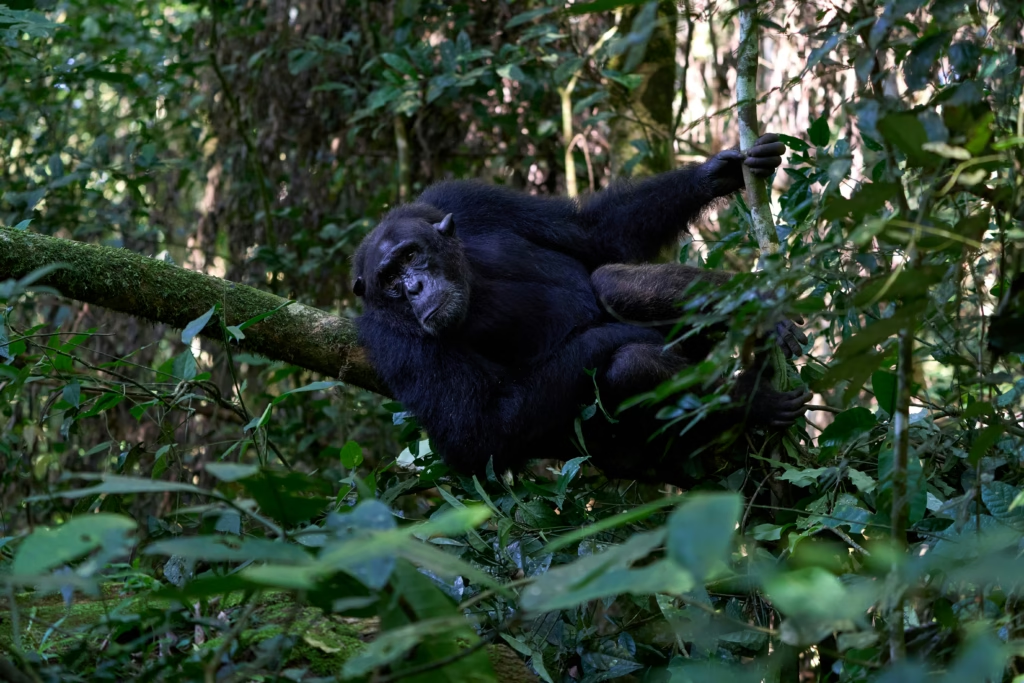
Chimpanzee tracking in Uganda & Rwanda gets pitched as gorilla trekking’s cheaper cousin but the two experiences don’t actually feel alike. Chimps move fast, stay loud and spend much of their time overhead in the canopy rather than on the forest floor therefore tracking them is less quiet approach and more following calls through dense trees until you catch up.
On a sad note, chimpanzees are vulnerable and researchers continue to observe their population decline. Uganda is home to an estimated 5,000 chimpanzees making it one of Africa’s top destinations for chimp tracking and habituation experiences with the largest number of Chimpanzees in Uganda being inhabited in Kibale National Park-Uganda’s number one Chimps tracking destination and the others in Budongo Forest within Murchison Falls National Park, Kyambura Gorge-a tree-carpeted ravine that dramatically severs the plains of Queen Elizabeth National and a very isolated number in Kalinzu forest. Rwanda’s population is smaller and concentrated in Nyungwe Forest National Park in the south which is a different forest entirely from where its gorillas live.
In order to protect these endangered animals, Chimpanzee Tracking in Uganda & Rwanda is highly regulated and requires some prior planning. Here’s everything travelers need to know from where to see them, how to plan a perfect chimpanzee tracking safari in both countries to what to pack for a memorable experience.
Explore some of our popular Chimpanzee Tracking packages combined with gorilla trekking and gorilla habituation for the ultimate primate experience in Uganda & Rwanda.
What a Normal Chimp Tracking Day Actually Looks Like: Uganda vs. Rwanda
A Typical Day in Kibale Forest National Park Uganda
Briefing happens at Kanyanchu Visitor Centre with departures at 8am, 11am and 2pm which is a flexibility Rwanda doesn’t offer. Guides track chimps mainly by sound, listening for hoots and screeches echoing through the forest then following the calls until the group is located. The walk itself is generally considered flat and less physically demanding than Bwindi’s gorilla terrain and sighting odds in Kibale run above 90%, among the highest of any chimp-tracking site in Africa. Once found, you get one hour with them before heading back to your accommodation.
Getting to Kibale, Uganda
By road from Kampala or Entebbe: roughly 6 hours. By air: fly from Entebbe to Kasese (about 1.5 hours), then drive approximately 1 hour to Kibale. The flight option is worth the extra cost if you’re combining Kibale with Bwindi on a tight schedule since it avoids a full day on road transfer.
A Typical Day in Nyungwe Forest National Park Rwanda
Briefing at Uwinka begins around 5:30am, noticeably earlier than Kibale because Nyungwe’s chimps are more mobile and harder to catch up with once they start moving. You’re assigned to one of two trails, Uwinka or Cyamudongo based on group size and where the chimps were last seen. The terrain is steeper and more physically demanding than Kibale’s, reflecting Nyungwe’s mountainous setting.
Getting to Nyungwe Forest, Rwanda
By road from Kigali: roughly 4 to 6 hours commonly combined with a Volcanoes National Park visit on the way south.
What this means for choosing between them: Uganda vs. Rwanda for Chimpanzee Tracking | A Direct Comparison
| Â | Uganda (Kibale) | Rwanda (Nyungwe) |
| Chimp population | Approximately 1,500 in the forest, across four communities, several habituated | Approximately 500, with two habituated troops (Uwinka and Cyamudongo) |
| Sighting odds | Above 90% | Lower: Nyungwe’s size and dense canopy make chimps harder to locate |
| Terrain | Generally flat and less demanding | Steeper, more physically demanding |
| Briefing time | 8am, 11am and 2pm | Around 5:30am |
| Minimum age | 12 years | 15 years |
| Unique add-on | Chimpanzee habituation experience | Canopy walk (90m long, 50m above the forest floor) |
| Permit cost | USD $300 | USD $150 |
Explore Uganda’s top chimpanzee trekking spots like Kibale, Budongo, and Kyambura with expert guides leading the way. For bookings, custom packages, or more info, contact us today via phone, email, or WhatsApp.
Other Places to Track Chimpanzees
Kyambura Gorge, Uganda
This is a narrow gorge on the edge of Queen Elizabeth National Park, home to a single chimpanzee troop effectively cut off from the rest of the region by surrounding land. Because the group’s range is small and well known to guides, sightings feel more concentrated since you’re not covering the same distance as in Kibale though the trade-off is a smaller, more contained experience. It’s also notably less expensive than Kibale’s standard permit.
Getting to Kyambura Gorge: Typically reached as part of a broader Queen Elizabeth National Park itinerary, with road access from Kasese or as a stop between Kibale and Bwindi.
Bugoma Forest, Uganda
Uganda’s newest chimp tracking destination, only officially opened to tourism recently by the National Forest Authority. Bugoma holds an estimated 140 habituated chimpanzees across two troops: Mwera South which is open to visitors and Mwera North reserved for ongoing research rather than tourism. It sits between Murchison Falls National Park and Hoima city, roughly 5 hours from Kampala, which makes it a genuinely useful stopover if you’re transferring between Murchison Falls and Fort Portal rather than backtracking. Because it’s newly opened, it’s also the least crowded of Uganda’s tracking sites by a clear margin.
Getting to Bugoma Forest: By road from Kampala: roughly 5 hours. It sits about 70km from Hoima city and works naturally as a stopover between Murchison Falls National Park and Fort Portal rather than a dedicated round trip.
Budongo Forest, Uganda
Located within Murchison Falls National Park in northwestern Uganda, Budongo is Uganda’s largest natural forest and hosts a chimp community habituated for both tourism and long-running research. Treks here tend to involve longer hikes than Kibale or Kyambura, which is part of why it’s usually paired with a Murchison Falls safari rather than booked as a standalone trip.
Getting to Budongo Forest: Located within Murchison Falls National Park’s boundaries, reached via the same road or air routes used for a Murchison Falls safari.
Kalinzu Forest, Uganda
Kalinzu Forest is widely considered the second-best chimp tracking destination in Uganda after Kibale. Of roughly 320 chimpanzees in the forest, around 50 are habituated for tourism which is a smaller habituated population than Kibale’s, but Kalinzu’s proximity to Queen Elizabeth National Park (it borders the conservation area) makes it a natural add-on for travelers already doing a Queen Elizabeth safari rather than a separate trip in its own right. The forest also holds six primate species and over 370 recorded bird species.
Getting to Kalinzu Forest: Reached via road as part of a Queen Elizabeth National Park itinerary. Given its location bordering the conservation area, most travelers add it on rather than routing to it separately.
How Many Days to Plan for a Chimpanzee Tracking Trip
Uganda: 3 to 4 Days for Kibale Alone
Kibale sits about 6 hours by road from Kampala, or roughly 1.5 hours by air to Kasese followed by another hour by road (worth the flight if your schedule is tight). A luxury pace allows for the transfer day, the tracking day itself and a buffer either side rather than an itinerary with arrival and transfer on the same day.
Rwanda: 2 to 3 Days for Nyungwe Alone
Nyungwe sits roughly 4 to 6 hours by road from Kigali making it a longer transfer than Volcanoes National Park but still manageable as a focused add-on to a Rwanda trip.
Combining Chimp Tracking With Gorilla Trekking: 5 to 7 Days
The most common pairing in both countries: Kibale combines naturally with Bwindi (both in western Uganda), while Nyungwe combines with Volcanoes National Park in a loop through Rwanda.
Read our full guide on combining gorilla trekking and chimpanzee tracking.
Other Activities to Add to a Chimp Tracking Trip
In and around Kibale: Kibale hosts over 13 primate species beyond chimps like black-and-white colobus, red-tailed monkeys, baboons and others plus more than 370 recorded bird species, making a guided nature walk a natural add-on as well as the Bigodi swamp walk. Queen Elizabeth National Park’s game drives and the Kazinga Channel boat cruise are also a short drive away if you’re tracking chimps in Kyambura.
In and around Nyungwe: The suspended canopy walk that is 90 meters long, 50 meters above the forest floor is Nyungwe’s signature add-on and isn’t available anywhere in Uganda. The park also holds 13 hiking trails covering over 130km, along with tea plantation visits and waterfall walks for a lighter day after tracking.
![]()
What Makes Chimpanzee Tracking Difficult
Chimp tracking is generally considered less physically demanding than gorilla trekking, but “less demanding” doesn’t mean easy. A few things worth knowing before you commit:
- The hike itself can run 1 to 6 hours, depending on how far the chimps have moved since they were last tracked therfore there’s no guaranteed short walk.
- Terrain varies more than the marketing suggests. Kibale is comparatively flat, but Nyungwe’s mountainous setting makes for a genuinely steeper, more demanding trek altitude in these forests runs roughly 1,100 to 2,500 meters depending on location.
- Sightings aren’t guaranteed anywhere. Even in Kibale, with sighting odds above 90%, that still leaves a real chance of a long walk with no encounter and chimps are notably more mobile than gorillas, ranging further and moving faster once you catch up with them.
- Wet-weather trekking is genuinely harder. Chimps tend to retreat higher into the canopy when the ground is wet, which can mean a longer wait for a clear view even after you’ve found them.
Dos and Don’ts of Chimpanzee Tracking
Do
- Follow your guide’s instructions at all times, including where to stand and how close to get.
- Keep your voice low and your movements calm and predictable.
- Wear neutral colors like khaki, green, brown to blend into the forest rather than stand out.
- Tuck your trousers into your boots or wear gaiters to protect against biting safari ants on the forest floor.
- Carry a good camera with a zoom lens, chimps are often high in the canopy, further away than gorillas typically are.
Don’t
- Don’t bring food into the forest otherwise chimps may attempt to take it from you.
- Don’t imitate chimp calls.
- Don’t use flash photography.
- Don’t trek if you’re feeling unwell: like gorillas, chimps are vulnerable to human respiratory illness.
- Don’t attempt to touch or approach a chimp even one that seems relaxed around your guide.

Cost of Chimpanzee Tracking in Uganda & Rwanda
Chimpanzee Permits
To participate in chimpanzee tracking, visitors are required to obtain permits. A permit for chimpanzee tracking in Uganda costs $300 per person for Foreigners and $200 for Foreign Residents while a permit in Rwanda costs $150 per person plus $100 for daily park entrance fees. It is important to note that permits need to be booked in advance due to limited availability. During the low season (April, May, and November), when demand is lower, prices of permits in Uganda are discounted to $200 for foreign non-residents and $150 for foreign residents.
Guide Fees
Chimpanzee trekking is conducted under the guidance of experienced park rangers or guides who are knowledgeable about the behavior and habits of chimpanzees. Guide fees are usually included in the overall cost and ensure a safe and informative trekking experience and can range between 30 to 50 USD per day.Â
Transportation costs
Depending on the location of the park, transportation costs may be included or separate from the overall cost. If transportation is not provided, visitors will need to arrange their own means of getting to the starting point of the trek. The cost of hiring a vehicle during a tour in Uganda is about 150 USD per day to 300 USD per day depending on the type of vehicle used.
Chimpanzee Habituation: A Longer, Deeper Experience
Habituation is the gradual process of acclimating a wild chimp community to human presence over roughly 2 to 3 years of regular, careful visits by researchers and guides. Standard chimp tracking only visits already-habituated communities; the habituation experience lets you join that process directly.
In Kibale, this is a full-day experience where you spend the whole day following researchers and rangers as they work with a community still being acclimated, rather than the standard one-hour viewing. It requires a real level of fitness, since you’re tracking a group that isn’t yet fully comfortable with human presence and may move further and faster than a habituated troop. This experience is only offered in Uganda’s Kibale Forest National Park at a permit cost of $400 per person for foreign non-residents and $300 per person for foreign residents.
Luxury Accommodation
For a luxury chimpanzee tracking experience in Uganda, there are several high-end lodges that offer comfort, privacy and easy access to the forests. Near Kibale National Park, Chimpundu Lodge stands out with its elegant suites, fine dining, and stunning views of the rainforest. Another premium option is Tabebuia Spa and Safari Resort, which combines luxury with wellness experiences, perfect for relaxing after a day in the forest. Both lodges offer seamless access to chimp trekking activities while providing exceptional service and a serene natural setting.
More questions about Chimpanzee Trekking
What should you Pack on a chimp Trekking Tour?
- A backpack to carry your water and packed lunch
- Snacks
- Water
- A camera
- Durable, lightweight water-resistant hiking boots with grippy soles.
- A water-repelling but ventilated jacket
- Layered clothing
- Long sleeves and long pants
- Insect repellant
- Gaiters if you have them or tuck your pants into your boots to hinder the safari ants
- Gardening gloves helps to avoid stinging nettles
Chimpanzee Trekking Planning Tips
- Permits must be booked in advance—a task that Engabi Tours and Travel experts can always take care of.
- To avoid negative attention, do not eat or snack near the chimpanzees
- Listen to your guide at all times.
- Trekking is limited to small groups.
Chimpanzee Trekking versus Gorilla tracking
The most compelling difference between chimps and gorilla tracking is the the fact that chimpanzees spend more time moving through the trees canopy while gorillas eat and move through the forest floor. Chimpanzees tend to be more livelier and noisier compared to gorillas to an extent that you feel like you are among the group surrounded by them which makes the whole experience really exciting.
Another major difference between the two experiences is duration with Gorilla trekking taking much longer to as far as eight hours in some cases. Both experiences allow visitors to spend one hour in the audience of the animals and they all require a permit.
Chimpanzee Trekking versus Chimpanzee Habituation Experience
The major difference between chimpanzee tracking and Chimpanzee Habituation experience is that during Chimpanzee Tracking visitors track families which are habituated and are used to human presence while the Habituation experience is a process of making chimps get used to human presence.
The other difference is that during Chimpanzee tracking, visitors are allowed to stay a a maximum of 1 hour with the chimps when they are located while during the Chimpanzee habituation experience visitors can spend an entire day with a Chimpanzee family
Is Chimpanzee Trekking in Uganda safe?
Chimpanzee tracking is very safe as long as you listen to your guide and respect chimp tracking etiquette such as maintaining a distance, never eating , snacking or smoking while in the presence of chimpanzees. Flash photography is also prohibited and you should speak quietly and move about calmly. Should a situation necessitate it, all treks are accompanied by an armed ranger who can fire a loud warning shot.
Are chimps friendly to humans?
In the context of chimp tracking, we must remember these are wild animals despite having been habituated but given their intellectual capacity and memory, you may witness chimpanzees exhibiting familiarity with some of the guides and rangers they are acquainted with though they will be indifferent to your audience carrying on with their lives in the quiet company of human observers.
Steps To Book With Us


Let us create exclusive,
tailor-made itineraries for your luxury safari or vacation.
Contact us with your travel preferences, and our experts will tailor a luxury itinerary to suit your needs.