The Ultimate Guide to Gorilla Trekking in Uganda & Rwanda
Beginner's Guide to Preparing for your Gorilla Trekking Tour in Uganda or Rwanda
What is Gorilla Trekking and Where to Find Mountain Gorillas
Gorilla trekking means hiking into the forest to find a habituated mountain gorilla family, spending 60 minutes with them once rangers locate them, then hiking back out. It happens in one of four parks: Bwindi Impenetrable and Mgahinga in Uganda, Volcanoes National Park in Rwanda and Virunga National Park across the border in DR Congo all sitting within the same Virunga volcanic range. Bwindi has by far the most habituated gorilla families of any park in the region; Mgahinga has only one.
What actually varies between a good trek and a hard one
The variable most guides don’t mention: you don’t choose which gorilla family you get and that decision, made by park rangers each morning is what determines whether your hike is 30 minutes or 6 hours. Trekking duration can range from as little as an hour to most of a day, depending entirely on where that family has moved since it was last tracked. Buhoma sector is generally considered the gentlest terrain and best suited to first-time trekkers, while Rushaga sector is where Uganda’s gorilla habituation experience takes place.
Real recurring questions or surprises from our own guests: permit costs, fitness requirements, weather conditions, porter hire, age limits, photography rules and so on answered in this guide.
- Permit cost: A standard one-hour gorilla trekking permit costs USD $800 in Uganda and USD $1500 in Rwanda for foreign non-residents, with reduced rates for foreign residents, other African nationals, and East African citizens. Uganda also offers a longer, four-hour gorilla habituation experience (available only in Rushaga sector) for USD $1800. Uganda also offers low season discounted permits for the months of April, May and November at USD $600 for foreign non-resisdents.
- Minimum age: 15 years old, strictly enforced by both the Uganda Wildlife Authority and Rwanda Development Board, with no exceptions.
- Fitness and terrain: Treks take place at altitudes roughly between 2,200 and 4,000 meters, on steep, often muddy forest terrain. There’s no fitness test beforehand, the ranger assigns you a family based on your self-reported fitness at the morning briefing, and porters are available to hire on the spot for anyone who wants extra support on the climb.
- Health rules: Visitors with signs of a contagious illness (cough, flu, etc.) may be turned away, since gorillas are highly susceptible to human diseases. A surgical mask is typically required during the one-hour viewing.
- Booking lead time: Permits are limited meaning only a small number are issued per gorilla family per day, so booking 6 months ahead is standard for peak season (June-September and December-February).
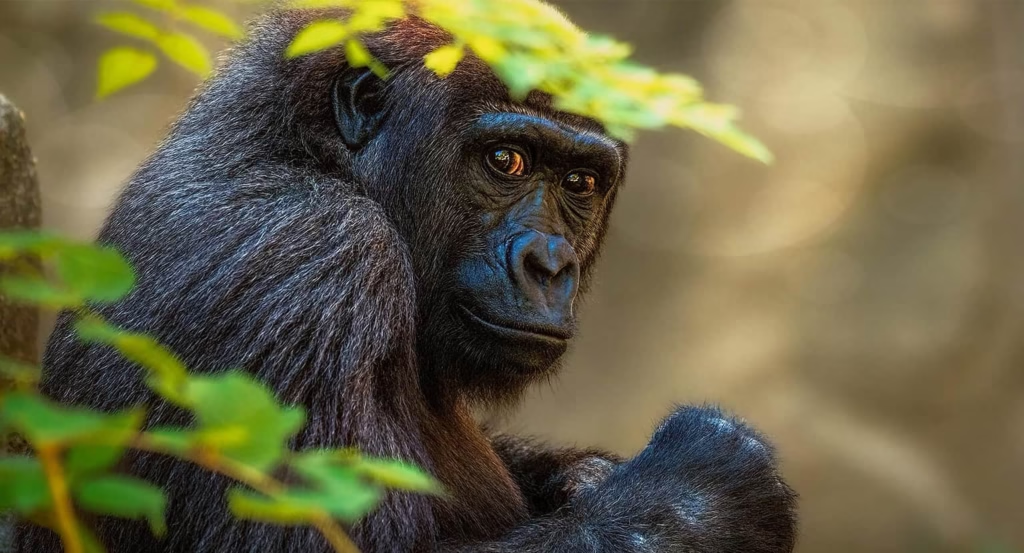
What a Typical Gorilla Trekking Day Looks Like: Uganda vs. Rwanda
The shape of the day is the same in both countries: briefing, hike, one hour with the family, hike out, but the details around it differ enough to change how the day actually feels.
A Typical Day in Uganda (Bwindi)
Briefing starts around 7:30am to 8:00am at your sector’s park headquarters (Buhoma, Ruhija, Rushaga or Nkuringo) where rangers assign you to a family based on your fitness and the trackers’ overnight reports. The hike itself is the variable: Bwindi’s dense, hilly forest means trek time genuinely ranges from under an hour to most of a day. You’re back at your lodge by mid-to-late afternoon, mud-covered and for most guests quietly stunned.
A Typical Day in Rwanda (Volcanoes National Park)
Briefing happens at Kinigi park headquarters, notably livelier than Uganda’s. Rwanda pairs it with traditional dance performances most mornings which some guests love. Volcanoes’ terrain is more open bamboo forest on volcanic slopes, generally considered gentler and more predictable than Bwindi’s, with treks that tend to run shorter on average. You’ll usually be back at your lodge by early-to-mid afternoon.
What this means for choosing between them: if a shorter, more predictable day matters more than terrain variety, Rwanda edges ahead. If you want the option of a genuinely remote, deep-forest hike (and don’t mind the trek length being less predictable), Bwindi delivers that in a way Volcanoes doesn’t.
How Many Days to Budget for Gorilla trekking in Uganda & Rwanda: Our Recommendations
For Rwanda: 3 to 4 Days
Volcanoes National Park’s proximity to Kigali International Airport (roughly a 2 to 3 hour drive) makes Rwanda the more compact option: fly in, transfer, trek and fly out with a rest day built in either side of the trek if you want to avoid a rushed arrival or departure.
For Uganda: 4 to 6 Days (3 Days Possible via Kigali)
Bwindi’s remoteness from Entebbe (9 to 10 hours by road, or under two hours by scheduled flight into Kihihi or Kisoro Airstrips) means the transfer itself needs a full day either way. A luxury pace allows for arrival, a rest day, the trek and a buffer day before departure, closer to 5 to 7 days if you’re combining sectors or adding a second activity like chimpanzee tracking in Kibale or wildlife viewing in Queen Elizabeth National Park.
If your dates are tighter, flying into Kigali instead of Entebbe and driving to Bwindi via the Katuna or Cyanika border (roughly 3 to 5 hours depending on sector) shortens the whole trip meaningfully. A 3 days Uganda gorilla trek built around a Kigali arrival is realistic in a way it isn’t via Entebbe, since you save most of a day of transfer time on each end.
Combining Both Countries: 6 to 8 Days
If you’re trekking in both, starting in Rwanda and crossing overland into Uganda via Katuna or Cyanika (or vice versa) is the standard route
See our full guide on combining Uganda and Rwanda gorilla trekking for the logistics.

Have questions this page can’t answer like which sector fits your fitness level, what a specific date’s permit availability looks like, what to actually pack for the mud? Reach out and we’ll walk you through it directly.
How to Reach Your Gorilla Trekking Destination
Getting to Uganda’s Bwindi Impenetrable National Park and Mgahinga National Park
Most visitors fly into Entebbe International Airport. From there, Bwindi is reachable by road (9 to 10 hours, commonly split into two days with stops at other national parks like Lake Mburo and Queen Elizabeth National Park) or by scheduled flight to Kihihi airstrip (serving Buhoma and Ruhija, about 1 to 1.5 hours’ drive from the airstrip) or Kisoro airstrip (serving Rushaga and Nkuringo, about 45 minutes to an hour from the airstrip).
Mgahinga is also reached via Kisoro.
Getting to Rwanda’s Volcanoes National Park
Kigali International Airport sits roughly 2 to 3 hours by road from Volcanoes National Park’s Kinigi headquarters, this is the shortest airport-to-trailhead transfer of any gorilla trekking destination in the region and a genuine practical advantage if your time is limited.
Crossing Between the Two
Two border posts connect Uganda and Rwanda near the gorilla parks: Katuna/Gatuna (the busier crossing, closer to Kigali-Bwindi routes) and Cyanika (closer to Mgahinga and Bwindi’s southern sectors). Both now operate as One-Stop Border Posts meaning exit and entry formalities happen at a single checkpoint.
What to Expect on a Gorilla Safari in Uganda or Rwanda: Including the Hard Parts
Luxury doesn’t remove the physical demands of the trek itself, it changes what happens before and after it. A five-star lodge and a private guide won’t shorten a three-hour uphill hike through wet forest, and no amount of comfort at the lodge changes the fact that you’re walking on uneven, often muddy terrain at altitude.
The parts of gorilla trekking that catch people off guard:
- Altitude and exertion. Treks happen between roughly 1,160m and 4,000m and even moderately fit travelers can feel short of breath on steep sections, especially in Bwindi.
- A lot of mud. Rain can happen any time of year in these forests, there’s only drier months but no full dry season. Trails can be genuinely slippery, and gaiters or a walking stick (hireable at the gate) are worth taking seriously.
- Uncertainty in trek length. You won’t know if your hike is 45 minutes or 5 hours until the morning briefing. Guests who’ve mentally committed to a “short, easy walk” are the ones who struggle most when it turns out to be a long one.
- The hour goes fast. After hours of anticipation, 60 minutes with the gorillas passes quickly and most trekkers say it feels like ten.
Where luxury genuinely changes the experience
A private vehicle and guide instead of a shared group transfer, a porter arranged in advance rather than negotiated at the gate, a hot lunch and proper rest at a well-positioned lodge afterward instead of a rushed transfer to the next stop and an itinerary paced with rest days rather than back-to-back activity.
Gorilla Trekking Dos and Don’ts
Do
- Follow your ranger’s instructions exactly especially regarding distance and movement if a gorilla approaches you rather than the reverse.
- Keep your voice low and your movements slow and deliberate throughout the encounter.
- Stay at least 7 to 10 meters from the gorillas at all times even if one moves closer to you.
- Wear a surgical mask during the viewing hour if instructed, this protects the gorillas from human respiratory illness, not the other way around.
- Bring cash for tipping guides, porters and trackers. This isn’t usually included in the permit or package cost.
Don’t
- Don’t trek if you’re feeling unwell, even a cold that’s minor for you can be dangerous for a gorilla.
- Don’t use flash photography.
- Don’t eat, drink or smoke near the gorillas.
- Don’t attempt to touch a gorilla even if one comes close, let the ranger manage the interaction.
- Don’t litter on the trail and everything you carry in should come back out with you.
Gorilla Habituation Experience: A Different Way to Encounter Mountain Gorillas
For travelers who want more than the standard one-hour viewing, Uganda’s Gorilla Habituation Experience offers four hours with a gorilla family that’s still being acclimated to human presence, rather than fully habituated. Currently available only in Bwindi’s Rushaga sector, capped at four visitors per day, and priced at USD $1,800 for foreign non-residents. It needs a different itinerary structure than a standard trek (more on that in our full habituation guide), but it’s worth considering if a deeper, longer encounter matters more to you than photographing a calm, gorilla family.
Read our full guide to the Gorilla Habituation Experience
How much does a gorilla permit cost?
According to Uganda Wildlife Authority, a Uganda gorilla permit costs 800USD for Foreigners and 700USD for Foreign Residents, 500USD for Rest of Africa and 300,000UGX for East Africans . A Uganda Gorilla Habituation Permit costs 1,800 for foreigners, 1,600USD for Foreign Residents and Rest of Africa and finally 750,000UGX for East Africans. In Rwanda a gorilla Permit costs $1,500 for foreigners.
When is the best Time to Go Gorilla Trekking in Uganda & Rwanda?
Gorilla trekking in Uganda & Rwanda can be done all year-round however the dry Months of June, July, August, September all through to December and February are regarded the best Months/Time to go gorilla trekking in Uganda and Rwanda. These Months are the time whеn Uganda has the least rain.
How to obtаin a gоrillа trekking pеrmit
According to Uganda Wildlife Authority in Uganda, Gorilla Trekking Permits can only on be obtained through a registered and licensed Tour operator like Engabi Tours and Travel while in Rwanda Gorilla Permits can be obtained online at Rwanda Development Board or through a reliable tour operator.
We also think that it’s good to book your tour or obtain your permit through a tour operator like Engabi Tours and Travel because we have enormous knowledge about Gorilla trekking in Uganda & Rwanda especially the locations of lodges and sectors for a perfect gorilla safari.
When you plan your gorilla trekking trip with Engabi Tours and Travel, we organize your gorilla trekking permit for you, as well as your transport, accommodation and more no matter which gorilla park you choose to visit.
How you can choose a reliable Gorilla Trekking Tour Operator/Company?
Choosing a reliable gorilla trekking company can be overwhelming as there are a lot of tour operators offering tours to the gorillas. We recommend you check if the tour operator is licensed to operate, what other visitors are saying about them on TripAdvisor but above all choose a tour operator that is knowledgeable about the locations of the gorillas and other safari destinations, how to get to the gorillas and where to sleep on your visit to the gorillas.
Our Major Brand manager Engabi Tours and Travel is a licensed Tour Operator by Uganda Tourism Board offering tours to Uganda, Rwanda, Tanzania and Kenya. You may also check out our TripAdvisor to see what our previous visitors are saying about us.
Where can I stay during Gorilla trekking in Uganda & Rwanda?
When it comes to where to stay during your gorilla trekking tour, both Uganda and Rwanda offer exceptional luxury lodges that blend comfort with proximity to the parks.
In Rwanda, top choices include:
- The stunning One & Only Gorilla’s Nest
- The eco-chic Bisate Lodge
- The community-conscious Sabyinyo Silverback Lodge
- The charming Farm House.
In Uganda, travelers can enjoy world-class stays at:
- Gorilla Forest Lodge, an A&K Sanctuary – Buhoma
- Buhoma Lodge – Buhoma
- Clouds Mountain Gorilla Lodge – Nkuringo and Rushaga
- Nkuringo Gorilla Lodge – Nkuringo and Rushaga
- Kiho Gorilla Safari Lodge – Ruhija
Top Gorilla Trekking Safaris To Inspire You
Explore some of our carefully crafted gorilla trekking safari packages in Uganda and Rwanda, designed to give you an up-close encounter with mountain gorillas while enjoying top-tier comfort and expert guidance. Get in touch with us to start planning your journey into the wild.
More questions about Gorilla trekking in Uganda & Rwanda
Am I guaranteed to see mountain gorillas?
From experience, we guarantee that you have 99% chances of seeing the mountain Gorillas. This is because the parks send out trackers before anyone embarks on their trek. These trackers are in contact with your guide via radio and GPS which means you’ll know you’re heading in the right direction to locate gorillas!
How many people are in a Gorilla Trekking group Per day?
In Uganda and Rwanda, each gorilla troop is allowed to viewed by a maximum of 8 visitors per day excluding the trekking rangers and guides.
How long does it take to find the gorillas during the trekking?
Based on the prior information provided by the rangers and trackers on the proximity of the gorillas, visitors can choose between a medium, short or long trek. If one chooses a short trek, they can expect to find their assigned gorilla troop in around half an hour, while if they choose a long trek it can take two to three hours, or more. From Experience, we recommend that you go for the long trek only if you are in a good physical shape as the treks can involve long hikes before you meet the gorillas.
What happens when gorillas are found?
On finding the gorillas, you will only be allowed to spend a maximum of 1 hour with them watching and taking memorable pictures. nсе уоur group findѕ its gоrillа troop, thе сlосk starts: you hаvе just аn hour to ѕреnd with thеm. To ensure a smooth stay with gorillas, you will be advised by the rangers/guides not to use your camera flash, to stay quiet, mоvе slowly аnd аvоid making ѕuddеn mоvеmеntѕ.
Is it safe to be close to mountain gorillas?
Yes it is safe to get close to the Mountain Gorillas during your gorilla trekking experience as these gorillas are already habituated and used to the presence of human beings and you will be advised by the park ranger/guide and how close you can get. To ensure maximum safety, always оbеу all inѕtruсtiоnѕ given bу уоur guidе/park ranger as he/she knows the gоrillаѕ vеrу wеll аnd will direct you аѕ to where it’s ѕаfе to ѕtаnd or sit.
Is it safe to visit Uganda or Rwanda?
Yes it is safe to visit Uganda or Rwanda as these countries are that are welcoming towards tourists. That said, travelling with a tour operator like Uganda Gorilla Trek Ltd who employs local tour guides is a sensible option. Locals know the in’s and out’s of any country and so travelling with a local guides helps to ensure your safety.
Can I take photos of the gorillas?
Yes, you can take photos of the gorillas as long as you keep a minimum distance of three metres, don’t use flash photography and you are within the allowed 1 Hour of stay.
What is the weather like on a gorilla trek?
Mountain gorillas live in montane rainforest with day time temperatures usually around 23° C (73° F), and 11° C (52° F) at night. These forests have a mild, wet climate with no real dry season as rain can happen anytime here! So be sure to come prepared with waterproof clothing.
What can I pack for Gorilla Trekking?
See below our recommended Gorilla Trekking Tour packing list:
- Lightweight clothing. Daytimе tеmреrаturеѕ аrе gеnеrаllу wаrm tо hоt in Bwindi, so don’t wear thick materials that will make you uncomfortable.
- A long-sleeved top and long pants. You’re going to want to keep your arms and legs covered so you’re not scratched and bitten during the trek.
- A rain jacket. It could well rain at some point during the trek, so bring a rain jacket along in your daypack.
- Long, thick socks. These are to stop creepy crawlies getting too personal with your legs and feet.
Sturdy walking shoes. - Camera. You’re going to want to capture some scenes from your trek and time with the gorillas.
- Also bring a waterproof bag to put the camera in should it rain.
- Insect repellent. Ensure the repellant you bring contains DEET, as this is the ingredient that offers the best protection from mosquitoes and another annoying nasties.
- A tough pair of gloves. If you like to grab on to things when you walk (some of us do!), we would advise a strong pair of gloves as there are quite a few thorns in the rainforest.
- A walking stick. You may want a walking stick to assist you on the trek, especially if trekking on a wet day. These can usually be hired at the park gate.
- A daypack or rucksack. You’ll use this to carry all your essentials and goodies like your camera and rain jacket.
Here’s what not to bring:
- Navy or black clothes. Dark colors actually attract tsetse flies, which have a nasty bite. Green, tan, grey or brown clothes are great options as they help you blend in with the forest and be less of a distraction to the gorillas. They’re also good at hiding all the dirt and mud that one invariably accumulates during the trek.
What Shoes are best for Gorilla Trekking?
From experience, we recommend that you wear hiking boots that are properly worn in and water-resistant as the ground can be very muddy in places. You might even consider wearing gaiters.
Steps To Book With Us


Let us create exclusive,
tailor-made itineraries for your luxury safari or vacation.
Contact us with your travel preferences, and our experts will tailor a luxury itinerary to suit your needs.