
Guide to Gorilla Habituation Experience in Uganda
Your Handy Guide to Planning a Successful Luxury Gorilla Habituation Experience in Bwindi
In ten years of arranging gorilla safaris from our office in Kampala, we have had the same conversation with countless travelers. They’ve booked their standard 1-hour gorilla encounter and then they ask: “Is there a way to spend more time with them?” The answer is yes and it’s one of the best-kept secrets in African travel. The Gorilla Habituation Experience gives you four hours with a gorilla family that is still learning to trust humans. It’s less polished, less predictable and infinitely more immersive than a standard trek. When we are asked to describe the difference, we put it this way: “A standard trek is like meeting someone at a dinner party. The habituation experience is like spending a full morning with their family, watching how they actually live.”
Here’s everything you need to know for your 2027 or 2028 luxury gorilla habituation trip.
What Is Gorilla Habituation?
Gorilla habituation is the process of gradually acclimating wild mountain gorillas to human presence. It takes between two and five years of dedicated work by researchers, rangers, and trackers.
The Uganda Wildlife Authority introduced the habituation experience for tourists in 2014, making it available exclusively in the Rushaga sector of Bwindi Impenetrable National Park. This is not a staged wildlife attraction. You are joining real conservation work in progress.
Why does the habituation process matter? Mountain gorillas are naturally wary of humans and with good reason. Generations of hunting and habitat destruction have taught them to retreat or become defensive when they see people. Researchers spend years earning their trust entirely within the gorillas’ natural environment: no feeding, no forcing contact. Just patient, daily observation until the gorillas understand that humans do not pose a danger.
The Ideal Gorilla Habituation Tour in Bwindi: Recommended Length for the trip
The Gorilla Habituation Experience gives you four hours with a gorilla family instead of the standard one, but that extra time comes with constraints a one-hour trek doesn’t have: it only runs in Bwindi’s Rushaga sector, only four visitors are allowed per group per day, and the whole day starts earlier and runs longer.
Building a trip around it properly takes more days than a standard gorilla trek, not the same itinerary with one activity swapped out.
For a properly paced luxury experience, four to seven days in Uganda is the realistic range, built around the habituation day itself. The ideal trip can look like this:
Day 1: Arrival and Rest
Fly into Entebbe or Kigali, transfer to a hotel near Entebbe or Kigali, and rest after the international flight rather than driving straight to Bwindi the same day. Rushing this leg is the single most common mistake in shorter itineraries, the road transfer to Bwindi’s southern sectors is long, and arriving already tired makes the early habituation morning harder than it needs to be.
Days 2: Transfer to Bwindi and Settle In
The drive to Rushaga sector takes most of a day; a luxury pace splits this with an overnight stop en route (commonly around Lake Mburo) rather than one long push, or uses a scheduled flight into Kisoro airstrip to cut the road time significantly
Day 3: The Gorilla Habituation Experience
An earlier start than a standard trek, since researchers begin working with the family from first light. Expect a full day: briefing, the hike in, four hours with the gorillas, and the hike back out.
Day 4: Rest Day
Built in deliberately, not as an afterthought: weather, fitness, or a rescheduled permit can shift the habituation day itself, and a luxury itinerary should absorb that without cascading into missed flights. If the day goes as planned, this becomes a day for rest or a second, lighter activity like a community walk, a nature walk, or simply recovery time at the lodge.
Day 5: An Additional Day
With the pressure off, this is where a second experience fits naturally: golden monkey tracking in Mgahinga, a standard one-hour gorilla trek in a different sector for a direct comparison, or a short extension to Queen Elizabeth National Park for game drives before flying home.
Why this differs from a standard gorilla trekking itinerary
A standard trek can be done comfortably in 3 or 4 days total. Habituation’s earlier start, longer day, and single-sector limitation (Rushaga only) mean the itinerary needs a buffer day the standard trek doesn’t require.
Reaching Rushaga for the Gorilla Habituation Experience
Fly Into Kisoro Airstrip
Aerolink Uganda runs scheduled flights from Entebbe International Airport to Kisoro airstrip, taking about an hour in the air. From Kisoro, it’s roughly a 45-minute drive to Rushaga gate. This cuts a 9-hour road day down to under two hours total and is the option most luxury itineraries default to, since it protects the rest of the trip’s pacing.
Drive From Entebbe or Kampala
The overland route runs via Masaka, Mbarara, and Kabale about 8 to 9 hours from Kampala, closer to 9 to 10 from Entebbe. Most operators split this into two days with stops in Mbarara or Kabale rather than one long push, since arriving at Rushaga already exhausted makes the early habituation morning that follows considerably harder.
Drive From Kigali, Rwanda
If you’re combining this with time in Rwanda, Rushaga sits close enough to the border that crossing via Cyanika is a realistic option, worth considering if your trip already has you in Kigali rather than routing back through Entebbe.
Benefits of Gorilla Habituation Experience in Uganda
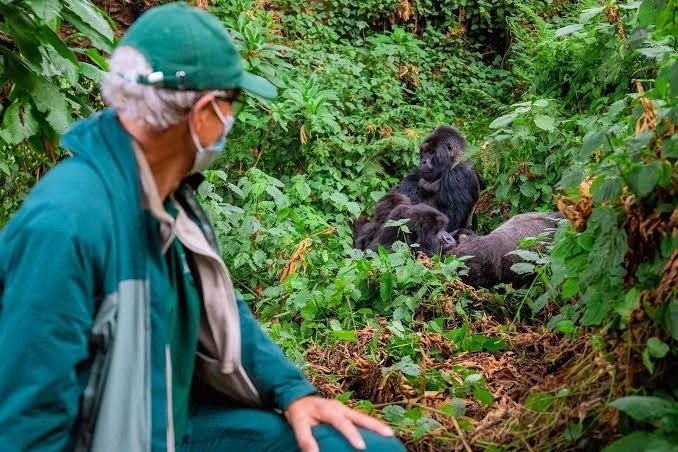
- Firstly, it provides valuable insights into gorilla behavior and ecology, contributing to scientific research and conservation efforts.
- By studying habituated gorillas, researchers can gather data on their social structure, feeding habits, reproductive patterns, and other aspects of their lives. Secondly, habituation allows for responsible tourism opportunities.
- Visitors who participate in gorilla habituation experiences have the chance to spend more time with these incredible animals, observing their natural behaviors up close.
- This immersive experience can create a deeper appreciation for gorillas and their conservation needs, leading to increased support for their protection. Lastly, gorilla habituation contributes to the local economy by generating revenue through tourism.
- The fees paid by tourists for gorilla habituation experiences help fund conservation initiatives and support local communities living near gorilla habitats.
- This creates incentives for local communities to actively participate in gorilla conservation efforts and reduces the potential for human-wildlife conflicts.
- These parks are home to several habituated gorilla groups, each with its own set of researchers and guides dedicated to their habituation process.
- It provides valuable scientific insights, supports responsible tourism, and contributes to the conservation of these endangered species.
Experience the rare opportunity to spend extended time with mountain gorillas through our gorilla habituation experience in Uganda. This unique encounter not only gives you a deeper understanding of gorilla behavior but also directly supports conservation efforts and benefits local communities. Book with us today and be part of a journey that makes a lasting impact for you and for the future of these incredible primates.
Gorilla Trekking vs. Habituation: The Real Differences
| Feature | Standard Gorilla Trekking | Gorilla Habituation Experience |
| Location | Multiple sectors in Bwindi & Mgahinga | Rushaga sector only, southern Bwindi |
| Gorilla Family | Fully habituated and calm with visitors | Semi-habituated; still learning to accept humans |
| Time with gorillas | 1 hour | Up to 4 hours |
| Daily permits | Up to 80+ across sectors | Only 4 permits per day |
| Experience Quality | Structured, predictable encounter | Rawer, more unpredictable, deeply educational |
| 2027 Permit Cost | $800 (Foreign Non-Resident) | $1,800 (Foreign Non-Resident) |
| Age Requirement | 15 years and older | 15 years and older |
| Group Size | Maximum 8 visitors | Maximum 4 visitors per gorilla family |
What Actually Happens During the Experience
The Early Start (7:00 AM)
Your day starts earlier than a standard trek. You’ll be at the Rushaga park headquarters by 7:00 AM for a specialized briefing. This isn’t just a formality it’s where you learn that you aren’t walking to a pre-located spot.
The Trek
You follow trackers and researchers working from the previous night’s clues. They look for bent stems, stripped vegetation, fresh dung, and knuckle prints in wet ground. This is one of the biggest differences from a standard trek. You are not simply being led to a gorilla family that is already settled for visitors. You are part of the search.
“The trackers communicate by radio, sharing updates on where the gorillas nested the night before,” Allan explains. “When you find a fresh nest site, you know you’re getting close. It’s detective work, and it’s fascinating.”
The Four-Hour Encounter
Once you find the gorilla family, the clock starts. For the next four hours, you stay with researchers and rangers following a semi-habituated family.
What makes this different:
You hear behavior before you see it. Chest beats carry through the forest. Researchers identify contact calls and warning vocalizations as they happen.
Juveniles test boundaries. They may move closer, climb, bluff, and then back off. A silverback may give a short warning grunt if he wants more space.
You learn the “why.” Researchers take notes on health, feeding, movement, and social interactions. You can ask questions: Why is that juvenile separating from the group? Why are the females grunting differently now?
The Commitment to Conservation
You aren’t just observing. You are part of the process. During habituation, rangers perform specific actions making calls and grunts, chopping vegetation with machetes, talking amongst themselves to slowly get the gorillas used to different sounds. The gorillas are still learning to tolerate human presence, so you must follow ranger instructions, keep your distance, and never push for a closer photo.
At the end of the experience, participants receive a gorilla habituation certificate.
The Risks and Considerations
1. Physical Demands
Don’t let the name “Impenetrable Forest” scare you off, but do respect it. Gorilla habituation is more strenuous than a standard trek.
You start earlier and could be on your feet all day. The terrain around southern Bwindi is steep, muddy, and slippery. You’re trekking at altitude, which adds to the challenge.
Our advice: We strongly recommend hiring a porter (around $20). They carry your daypack and offer a steady hand on steep slopes. More importantly, this directly supports the local community.
2. Less Predictable Encounters
Because the gorilla family is still in the habituation process, their responses are more variable. A silverback may be more cautious or more curious than a fully habituated gorilla. You must be prepared for: longer treks to find them, the possibility that they move quickly and you need to follow, and strict adherence to ranger instructions.
3. Health and Safety
To protect the gorillas from human diseases, face masks are required during the encounter. You must maintain a distance of at least 7 meters from the gorillas, and flash photography is strictly prohibited.
4. Limited Availability
Only 4 visitors are allowed per gorilla family per day, and just 1 family in Rushaga is currently open for habituation. That means a maximum of 4 permits exist for this entire experience on any given day across the whole park.
2027/2028 Permit Costs: What You Need to Know
Effective January 2027, the Uganda Wildlife Authority has increased gorilla habituation permit prices. Here are the current and upcoming rates:
| Category | 2026 Price | 2027 Price (From Jan 2027) |
| Foreign Non-Resident | $1,500 | $1,800 |
| Foreign Resident | $1,000 | $1,600 |
| Rest of Africa | $1,000 | $1,000 |
| East African Citizen | UGX 750,000 |
UGX 750,000 |
Why the price increase? The permit fee supports years of research, ranger welfare, trail maintenance, and community programs. Before any gorilla family becomes available for tourism, researchers spend years following, observing, and documenting the group. Revenue from habituation permits directly funds this work
Best Time to Go For Gorilla Habituation Experience
You can track mountain gorillas in Uganda throughout the year, with consistent temperatures averaging 20-25°C, but the dry seasons from June to August and December to February offer the most comfortable conditions. During these peak months, the trails are firm and less slippery, making trekking and the gorilla habituation experience significantly easier as the primates remain in more accessible areas of the forest. The heavy rainy season runs from March to May, with a lighter spell in October and November, when trails become muddy and more challenging to navigate. However, the wet season has its own advantage: after a rain shower, the air clears of dust, creating a crisp, vibrant atmosphere that offers exceptional conditions for gorilla photography a trade-off many photographers find well worth the mud.
The Best Luxury Accommodation for your Gorilla Habituation Tour
Clouds Mountain Gorilla Lodge
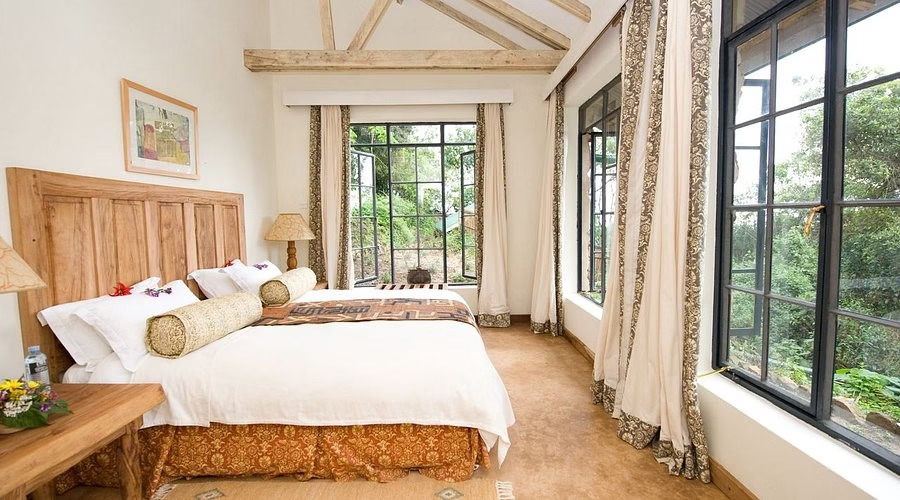
Located approximately 35 minutes from Rushaga Gate
At over 2,200 metres in Bwindi’s Nkuringo sector, Clouds Mountain Gorilla Lodge rises above the mist, with sweeping views of the Virunga volcanoes that make you feel as though you are above the clouds.
The lodge has just eight private cottages, thoughtfully designed to maximise the spectacular views. Its remote, high-altitude setting gives Clouds a uniquely peaceful and dreamy atmosphere.
Nkuringo Gorilla Lodge
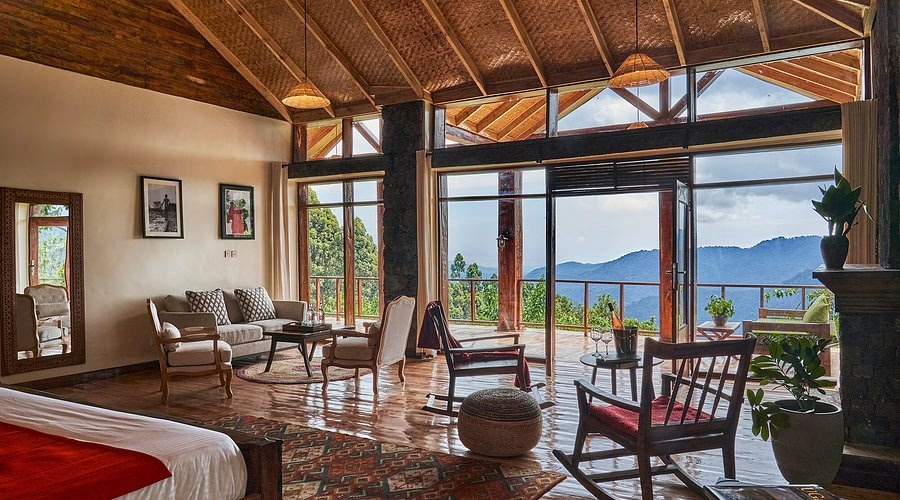
Located approximately 35 minutes from Rushaga Gate
Set on the edge of Bwindi Impenetrable Forest in the Nkuringo sector, Nkuringo Gorilla Lodge offers a peaceful retreat surrounded by lush forest and dramatic views of the Virunga volcanoes.
The lodge features comfortable cottages and villas, thoughtfully designed to blend into the natural surroundings while offering panoramic views. Its secluded location, warm hospitality and proximity to the gorilla trekking trails make it an ideal base for exploring Bwindi.
What to Pack for a Luxury Gorilla Habituation Experience in Uganda
It is advisable that you come well prepared for the incredible Gorilla Habituation experience in Uganda. Here’s our recommended packing list for an amazing gorilla habituation experience in Uganda:
- Sturdy, waterproof hiking boots with good ankle support
- Light, breathable, waterproof jackets, trousers and long-sleeved shirts
- Long, lightweight woolen socks
- Wide-brimmed hat and sunglasses for sun protection
- Toiletries such as sun cream, insect repellent, bite relief cream and lip balm
- Garden gloves
- A small backpack to carry your water, lunch, binoculars and camera
- Camera with extra lenses and batteries
- Binoculars
- Snacks for extra energy
- Multi-way travel adaptor
Ready to Plan Your Habituation Trip?
The habituation day is only one part of getting this trip right, the days around it are what make it feel unhurried rather than rushed. Tell us your travel window and we’ll build the itinerary backward from the habituation day itself, with the buffer and pacing a four-hour gorilla encounter actually deserves.
Top Luxury Gorilla Safaris | Uganda & Rwanda Gorilla Tour Packages
Steps To Book With Us



Let us create exclusive,
tailor-made itineraries for your luxury safari or vacation.
Contact us with your travel preferences, and our experts will tailor a luxury itinerary to suit your needs.