Gorilla Trekking and Wildebeest Calving Season Safari (January to March)
Plan a Gorilla Trekking and Wildebeest Calving Season Safari in December, January, February & March | Track Gorillas in Bwindi or Volcanoes & Witness Peak Predator Action in Southern SerengetiÂ
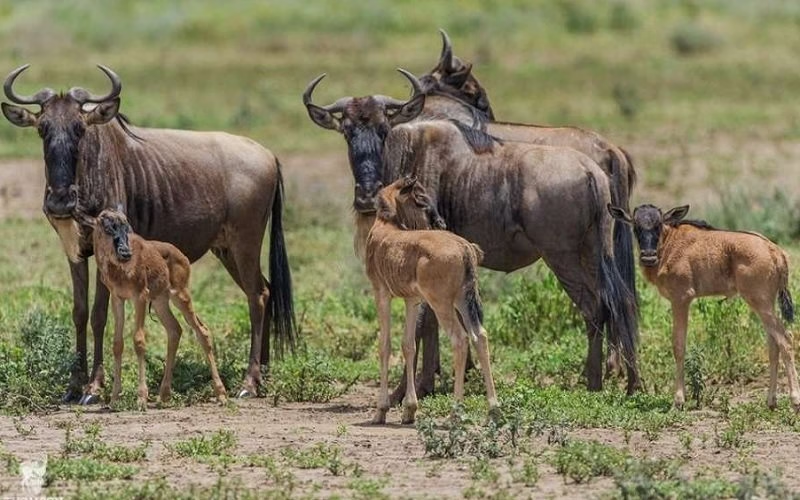
Most guests planning a gorilla and Serengeti trip default to August or September chasing the river crossings everyone’s seen in documentaries. Calving season is the quieter alternative. Between late January and mid-March, roughly 500,000 wildebeest calves are born on the southern Serengeti’s short-grass plains around Ndutu, with approximately 8,000 births a day at the peak. That concentration of newborn calves draws the heaviest predator activity of the entire migration year: lions, cheetahs and hyenas are never far from the herds during this window.
What to Expect During the Calving Season
The Ndutu area’s open, short-grass plains mean you can watch calving herds at close range without dense vegetation blocking the view, the kind of unobstructed wildlife photography Serengeti’s more wooded central and northern sectors don’t offer.
Predator action is the real draw here: with thousands of vulnerable newborns on the plains, lion and cheetah hunts happen in plain sight far more often than during other months. It’s a rawer, more visceral safari than the crossing-season spectacle, less about the scale of one dramatic event, more about the constant, close predator-prey tension playing out over days.
Crowds are meaningfully lighter than August and September, since calving season hasn’t caught on the way river crossings have therefore camps in the Ndutu/southern Serengeti area don’t face the same advance booking pressure that peak-season Mara River camps do.
How to Move Between Gorilla Trekking and Calving Season Serengeti
The same three routing options apply here as with any gorilla-Serengeti combination: Kigali, Entebbe or Kilimanjaro-first, but calving season adds one practical wrinkle: Ndutu and the southern Serengeti sit further from Kilimanjaro’s usual entry point than the northern Serengeti does during crossing season, so plan slightly more transfer time on the Tanzania leg.
If starting with gorillas: fly into Kigali, trek in Rwanda’s Volcanoes National Park (permit costs $1500 for foreigners) or cross via Katuna/Cyanika into Bwindi Impenetrable National Park for Uganda (permit costs $800 for foreigners), then fly to Kilimanjaro and transfer to Ndutu roughly 3 to 4 hours by road from Arusha, or a shorter scheduled flight into the Ndutu airstrip serving the southern Serengeti.
If starting with Serengeti: fly into Kilimanjaro, base yourself in Ndutu or the southern Serengeti for the calving-season game viewing, then fly to Kigali or Entebbe for the gorilla trek to close the trip.
RwandAir has direct flights from Kigali to Kilimanjaro flight as well as Uganda Airlines from Entebbe, Air Tanzania and others (about 1 hour 45 minutes).
How Many Days to Plan
10 to 12 days is the realistic range for a properly paced calving-season combination: 3–4 days for gorillas (including transfer and buffer days), 1 transfer day between countries, and 4–6 days in the Ndutu/southern Serengeti area, calving season rewards a slower pace, since the best sightings often come from patient waiting near a herd rather than covering ground quickly.
A Sample 14 Days Uganda Gorilla & Chimpanzee Trekking and Wildebeest Calving Season Safari Itinerary
Days 1–3: Kibale Forest, Uganda
Arrival at Entebbe, transfer to Kibale (about 6 hours by road, or a shorter flight via Kasese), settle in, then a morning of chimpanzee tracking.
Days 4–6: Bwindi Impenetrable National Park, Uganda
Transfer south to Bwindi, a rest day to settle in before trekking, then your gorilla trekking day.
Day 7: Transfer to Kigali, Rwanda Cross the border via Cyanika into Rwanda and continue to Kigali, ready for the onward flight.
Day 8: Fly to Kilimanjaro. Transfer to Arusha to connect with a bush flight the following morning.
Day 9: Bush Flight From Arusha to the Southern Serengeti
A scheduled light-aircraft flight from Arusha direct to an airstrip serving the Ndutu/southern Serengeti area, far faster than the road transfer, and timed to land you in the calving grounds with a game drive still possible that afternoon.
Days 9–11: Ndutu and the Southern Serengeti (3 Nights)
Full days centered on the calving plains, predator activity at its most concentrated anywhere in the migration calendar, with newborn calves and the lion, cheetah and hyena activity that follows them.
Day 12: Ngorongoro Crater (1 Night)
A short transfer from Ndutu to Ngorongoro, close enough that it’s often done by road rather than a second flight. A full day descending into the crater floor for some of the densest wildlife viewing in Africa, in a much smaller, self-contained area than the open Serengeti plains.
Day 13: Tarangire National Park (1 Night)
On to Tarangire, known for its elephant herds and the baobab-dotted landscape, a different visual register from both the Serengeti and the crater, and a good closing note before departure.
Day 14: Departure
Transfer to Kilimanjaro airport for your flight home.

Ready to Plan a Gorilla Trekking and Calving Season Safari?
If crossing-season photos are what everyone else is showing you, calving season is the trip fewer people know to ask for: closer predator action, quieter camps and a gorilla trek on the same trip.
Tell us your dates and we’ll build the routing around Ndutu’s peak birthing window rather than a usual Serengeti itinerary.
Where to Stay
Gorilla Trekking in Volcanoes National Park, Rwanda
For a mid-luxury base, Ingagi Park View Lodge is the go-to. Moving up a tier, Sambora Lodge is the normal-luxury option. At the very top end, One&Only, Bisate Lodge and Singita Kwitonda and Kataza House all offer an ultra-luxury stay near the park.
Gorilla Trekking in Bwindi Impenetrable National Park, Uganda
Four Gorillas Lodge covers the mid-luxury tier here. For normal luxury, Buhoma Lodge, Nkuringo Gorilla Lodge and Kiho Gorilla Safari Lodge are all strong options depending on which sector you’re trekking from. At the ultra-luxury end, Gorilla Forest Lodge is the standout.
Southern Serengeti / Ndutu
Ndutu Safari Lodge and Kati Kati Tented Camp are the mid-luxury picks for this area. For normal luxury, Woodlands Camp and Lemala Mara and Ndutu Camp are worth considering, it’s a seasonal mobile camp that relocates between the southern plains and the north to track the migration, and it’s currently positioned here for calving season. At the ultra-luxury end, Mwiba Lodge is the clear choice: set in the private Mwiba Wildlife Reserve directly bordering the southern Serengeti, it’s purpose-positioned for calving season specifically rather than just nearby.
Ngorongoro Crater
Serena Ngorongoro and Naserian Safari Camp are the mid-luxury options on the crater rim. Stepping up, Lemala Ngorongoro Tented Camp and Karibu Camps’ Lion’s Paw both offer normal luxury. For ultra-luxury, Ngorongoro Crater Lodge is the obvious pick perched directly on the rim, it’s one of the most recognized ultra-luxury addresses in Tanzania.
Tarangire National Park
For normal luxury here, Lemala Mpingo Ridge and Karibu Camps’ Elephant Springs are both solid. For ultra-luxury, Chem Chem Lodge is worth including, though it’s worth noting it sits in the Chem Chem concession between Tarangire and Lake Manyara rather than inside the park itself, still the closest ultra-luxury base for this leg.
Why Pick the Calving Season Over Other Safari Times
There are benefits to the Serengeti’s calving season that many tourists miss. This season feels more flowing and less congested than river crossing months. Congestion is lessened as cars disperse over large areas. Wildlife activity doesn’t happen in spurts; it happens all day long. The emphasis on births feels motivating rather than intense, and costs frequently stay more flexible, adding value without compromising.
Lighting and scenery are perfect for photographers. Behavior patterns continue to be apparent and constant for researchers. Travelers who prefer substance to spectacle find the Great Migration calving season appealing because of these features. Frena Adventures suggests this time frame for both experienced travelers and first-time safari visitors. In equal measure, the experience offers emotion, education, and authenticity.
The Great Migration Patterns During Other Months of the Year
The Great Migration in April and May (Mating Season)
After giving birth to their young ones in February and March, around April the wildebeest herds begin to move northwest toward the fresher grass of the central Serengeti drawing with them thousands of zebra and smaller groups of antelope. By May, herds of wildebeest stretch for several kilometres as the animals start to congregate by the Moru Kopjes. Mating season begins toward the end of May and male wildebeest battle head-to-head. Throughout ‘the rut,’ the journey continues at leisure with the wildebeest, zebra and gazelle grazing as they go along.
Gradually, the movement gathers momentum and the wildebeest start to mass in the Serengeti’s Western Corridor. The herds form in huge numbers along the pools and channels of the river which they have to cross in order to continue on their journey. This may not be as spectacular as the famous Mara crossings but there are still enough wildebeest to provide the Grumeti crocs with a veritable feast.
The Great Migration in June and July (Grumeti and Mara River Crossings)
During June, the dry season starts with large concentrations of wildebeest in the Western Serengeti and on the southern banks of the Grumeti River. Each migrating animal must face the challenge of crossing the crocodile-infested river which is the first of many daunting and tense river encounters.
As June moves into July, the hundreds of thousands of wildebeest and zebra continue to head north along the western edge of the park toward an even riskier barrier: the Mara River in the north of the Serengeti. These river crossings are arguably one of the most exciting wildlife events on Earth. They usually begin at the onset of high season in July but timing all depends on nature. Later in July, those animals that have successfully made it across the Mara River will also be found in the Masai Mara. At this time, daily river crossings can be seen at the Mara and Talek rivers, both often central to incredible scenes.
The Great Migration in August, September and October (Peak of the Mara River Crossing)
By August, the herds have faced the challenge of crossing the Mara River and are spread throughout the Masai Mara’s northern region, with many remaining in the northern Serengeti. In years when the river is in full flow, the panic and confusion at the crossings combined with waiting predators and surging currents can cause massive loss of life. But even in years of relatively gently flowing water, the crocs take their toll not to mention the lions and other large predators that patrol the banks ready to ambush any wildebeest that make it to the other side. Please note that there is no single crossing meaning that at some spots there are just a few individuals while others see a mass of animals moving without break for hours.
By September to October, the main chaos has ended and the migrating columns have gradually moved eastward. However, they wildebeest will face the heavy waters of the Mara River once more as they prepare to cross once again for their return journey southward.
The Great Migration in November and December
After the East African short rains in late October and early November, the wildebeest move down from Kenya and into the eastern limits of the Serengeti past Namiri Plains an area known for outstanding cheetah sightings. By December, they are spread throughout the eastern and southern reaches. In the early months of the new year, the grasses in the deep south of the Serengeti are lush with rain. This draws the herds of wildebeest and hundreds of thousands of zebra and other plains animals. The cycle continues as the calving season starts once again.
Frequently Asked Questions
Is calving season better than crossing season?
Different, not better or worse: calving season offers closer, more frequent predator action and fewer other travelers; crossing season offers the singular spectacle of the river crossings themselves. Couples or travelers who’ve already seen crossing-season footage and want something rawer and less crowded tend to prefer calving season once they understand what it actually offers.
Will I definitely see calves being born?
No safari can guarantee a specific birth in front of you, but the volume is high enough, thousands of calves over a few weeks that most visitors during peak calving (late January through February) see multiple births or very young calves within days of birth.
Is this a good season to combine with gorilla trekking specifically?
Yes. January through March overlaps with one of Uganda and Rwanda’s two dry seasons (December to February, tapering into March), so trekking conditions are good on the gorilla side of the trip too, not just the Serengeti side.
Steps To Book With Us


Let us create exclusive,
tailor-made itineraries for your luxury safari or vacation.
Contact us with your travel preferences, and our experts will tailor a luxury itinerary to suit your needs.